
Armagh Bramley Apples: Northern Ireland's Protected Heritage
The Armagh Bramley apple is more than just a cooking apple—it's a living testament to centuries of agricultural heritage in County Armagh. With Protected Geographical Indication status and a distinctive flavor profile shaped by Northern Ireland's unique terroir, these remarkable apples represent the pinnacle of British and Irish culinary apple cultivation.
What Are Bramley Apples?
The Bramley apple was discovered in 1809 by Mary Ann Brailsford in Southwell, Nottinghamshire, who planted pips in her garden. The seedling that resulted produced a cooking apple of such exceptional quality that it became Britain and Ireland's premier culinary variety. Named after Matthew Bramley, who later owned the property, this remarkable apple has been propagated through grafting for over two centuries.
Bramley apples are immediately recognizable by their large size, distinctive green skin that develops red flushes in autumn sunlight, and firm, white flesh. Unlike eating apples bred for sweetness and crispness when raw, Bramleys are culinary specialists. Their high acidity and exceptional pectin content make them transform beautifully when cooked, breaking down into a fluffy, flavourful puree that holds its sharp, distinctive taste even with added sugar.
What makes Bramleys truly special is their cooking behavior. When heated, the flesh collapses into a smooth, airy texture—perfect for pies, crumbles, and sauces—while maintaining a complex tartness that balances sweet pastries and rich dishes. This unique characteristic has made them irreplaceable in traditional British and Irish cooking for generations.
Protected Geographical Indication Status
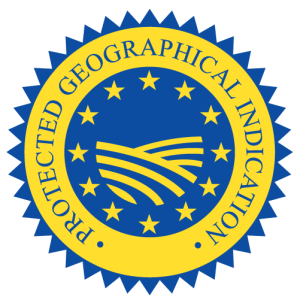
The Armagh Bramley apple holds Protected Geographical Indication (PGI) status across the European Union and United Kingdom, recognizing that Bramleys grown in County Armagh possess unique qualities directly attributable to their geographic origin. This isn't marketing—it's legal recognition that these apples are genuinely different from Bramleys grown elsewhere.
PGI status requires that apples meet strict criteria: they must be grown within defined areas of County Armagh, cultivated according to traditional methods including specific tree spacing and pruning practices, and harvested at optimal maturity when they reach minimum diameter and acid-sugar balance specifications. Only apples meeting these standards can be marketed as "Armagh Bramley apples."
What makes Armagh Bramleys distinct is the region's unique microclimate and soil composition. County Armagh's heavy clay-loam soils, enriched by centuries of orcharding tradition, provide mineral profiles that influence flavor development. The region's moderate maritime climate—cool springs, temperate summers averaging 15-18°C during fruit development, and gradual autumn cooling—creates ideal conditions for Bramleys to develop their characteristic sharp acidity while building the complex flavor compounds that distinguish Armagh fruit.
The PGI certification represents more than agricultural standards—it preserves a cultural heritage. Orchard Armagh, the region surrounding the city, has been renowned for apple cultivation since the 17th century. The PGI ensures these traditions continue, protecting small orchards like ours that maintain heritage practices rather than industrial-scale monoculture. Our Armagh Bramleys are part of Northern Ireland's heritage food tradition, representing protected foods with genuine provenance and cultural significance.
Growing Armagh Bramleys: Orchard Expertise
Working with Armagh Bramley apples day after day has taught us the intricacies of this remarkable variety. At our Portadown orchard, we've learned through direct experience what makes these apples exceptional—and challenging to grow.
The growing season begins in late April when our Bramley trees burst into blossom. The timing is critical: Bramleys bloom later than many commercial varieties, which helps them avoid late frosts that can devastate earlier-flowering apples. In our microclimate, we typically see full blossom in late April to early May, when the risk of hard frost has passed. These pink-white flowers attract pollinators from across our orchard, and we've learned that good pollination—requiring other apple varieties nearby—is essential for fruit set.
Through the summer months, we monitor fruit development closely. Bramley trees require traditional spacing of 5 meters between trees to ensure proper air circulation and light penetration—requirements written into the PGI standards but validated by our daily observation. Crowded trees develop fungal issues and produce smaller, less flavorful fruit. We've also discovered that Armagh's clay-loam soils, while excellent for flavor development, require careful drainage management. After heavy summer rains, we check for waterlogging in low-lying sections of our orchard, as Bramleys are sensitive to root oxygen deprivation.
Harvest timing is the most critical decision we make each year. We've learned that optimal picking occurs when the apples reach 70mm diameter and the starch begins converting to sugars—usually mid-September in our location. Too early, and the apples lack flavor complexity; too late, and they become mealy. We test starch conversion using iodine solution on cut fruit, watching for the telltale pattern that indicates readiness.
These hands-on learnings, passed through generations of Armagh growers and refined through our own seasonal observations, are what make our apples truly exceptional. The PGI requirements aren't just regulations — they're the codification of agricultural wisdom earned through centuries of working this land.
Nutritional Profile of Bramley Apples
Bramley apples are nutritional powerhouses, particularly when compared to sweeter eating varieties. Their high acidity and lower sugar content — around 9-10% compared to 12-15% in dessert apples — means they deliver concentrated nutrients without excessive calories.
The vitamin C content in Bramleys is notably higher than in many eating apples, thanks to the acidity that helps preserve ascorbic acid. This makes them particularly valuable during autumn and winter months when fresh produce diversity declines. The high fiber content, including both soluble pectin and insoluble cellulose, supports digestive health and helps regulate blood sugar levels—ironic for such a tart fruit.
Bramleys are also rich in phenolic compounds, particularly chlorogenic acid and quercetin, which act as antioxidants in the body. Research suggests that cooking apples, despite their processing, may retain more of these beneficial compounds than eating apples because their cell structure breaks down differently during heating, potentially improving bioavailability. The sharp taste that defines Bramleys comes partly from malic acid, which has been studied for its role in energy metabolism and exercise recovery.
When we process Bramleys into our apple powder, we preserve these nutritional benefits in concentrated form. The dehydration process removes water but retains fiber, vitamins, and phenolic compounds, creating a shelf-stable product that delivers the nutritional essence of fresh Armagh Bramleys year-round.
Cultural Heritage & Northern Ireland Cuisine
In Northern Ireland, Bramley apples aren't just an ingredient—they're a cultural touchstone. For generations, autumn has meant apple tart made with Bramleys, their sharp flavor balanced by sugar and encased in buttery pastry. Traditional recipes passed through families rely specifically on Bramleys because no other variety achieves the same fluffy texture when baked or the same balance of tart and sweet.
The role of Bramley apples in Ulster cuisine extends beyond desserts. They appear in savory dishes too: apple sauce served with pork, apple and onion stuffing, and bramley chutney that accompanies cheese and cold meats. These culinary traditions developed because Bramleys were abundantly available in local orchards and because their high acidity meant they kept well through winter when stored properly in cool, dry conditions.
The decline of commercial orchards in Northern Ireland has threatened this culinary heritage. Many traditional orchards were grubbed up in the late 20th century as cheaper imported fruit flooded markets. This makes the PGI protection particularly important—it provides economic incentive to maintain Bramley orchards and preserves the agricultural knowledge required to grow them properly.
At Macha's Orchard, we see our work as cultural preservation as much as agriculture. By maintaining heritage Bramley trees and creating value-added products that extend their availability, we're helping ensure that future generations can experience these remarkable apples and the culinary traditions they support. Our social enterprise model means the profits from sales reinvest directly into this preservation mission.
Macha's Orchard: From Heritage Trees to Modern Products
At our Portadown orchard, heritage Armagh Bramley apples are at the heart of everything we do. Our trees—many grafted from scionwood over 100 years old—connect us directly to the agricultural traditions that made County Armagh famous as "Orchard County." We maintain these trees using PGI-compliant practices not because regulations require it, but because generations of growers proved these methods produce the best fruit.
Each September and October, when our Bramleys reach optimal ripeness, we hand-harvest fruit that carries the distinctive terroir of our location. The apples are sorted within hours—the finest specimens go to fresh markets and local shops, while fruit that doesn't meet cosmetic standards (but is nutritionally and flavorfully identical) becomes the foundation for our apple powder and apple cider vinegar.
This waste reduction approach is central to our mission. Bramley apples are challenging to grow commercially—they require specific care, have a short harvest window, and cosmetic imperfections are common. Rather than discard fruit that's nutritionally perfect but visually imperfect, we transform it into products that preserve the heritage flavor and nutritional benefits of Armagh Bramleys year-round.
Our products honor the fruit's heritage while meeting modern needs. Discover the health benefits of apple powder, which delivers concentrated Bramley flavor and nutrition in a shelf-stable form perfect for smoothies, baking, and cooking. Explore our apple cider vinegar, crafted using traditional fermentation methods that allow the natural complexity of Armagh Bramleys to develop through patient barrel aging. Every product we create maintains the connection between the heritage trees in our orchard and the people who value real food with genuine provenance.
Experience Armagh Bramley Heritage
Discover products made from our heritage Armagh Bramley apples, crafted to preserve the distinctive flavor and nutritional benefits of Northern Ireland's only PGI-protected produce.